Most kitchen storage advice is about the things you use every day, and honestly those look after themselves. You put the frying pan back near the stove because you used it an hour ago. The real problem is the other end: the pasta maker you were given, the turkey-sized roasting tin, the cookie cutters that come out once a year. Those get pushed to the back of a high cupboard or carried off to the garage, and the next time you need them you are standing on a chair opening every door.
A kitchen you can remember comes from two decisions: zone the everyday things by task, and give the rarely used things fewer, clearer homes.
Start with four zones
Zoning means storing things where you use them, not where they happen to fit. Walk through a normal evening meal and notice where you stand for each step.
| Zone | Where | What lives there |
|---|---|---|
| Prep | The longest stretch of counter, ideally between sink and stove | Knives, chopping boards, mixing bowls, measuring cups, peeler, grater |
| Cooking | Drawers and cupboards beside the stove | Pans, lids, spatulas, oils, salt, everyday spices, oven gloves |
| Cleaning | Under and beside the sink | Dish soap, cloths, dishwasher tablets, bin bags, a small bucket |
| Pantry | A tall cupboard or shelves away from the stove's heat | Dry goods, cans, baking supplies, snacks |
Two tips make zones stick. Put plates and glasses near the dishwasher so unloading takes one step, not ten. And keep cleaning chemicals in one closed cupboard, with a child lock if small children visit; read the labels for storage instructions.
Where to put rarely used kitchen equipment
For anything used less than about once a month, choose one of three tiers and stick to it:
- High cupboards in the kitchen for light things used a few times a year: piping bags, cake tins, the spiralizer, the good serving platters.
- One deep low cupboard for heavy appliances: stand mixer bowl attachments, the slow cooker, the ice cream maker bowl (unless it lives in the freezer). Heavy items belong low, never above head height.
- Out of the kitchen entirely for things used once a year or less: the turkey roasting tin, the jam pan, party glasses, the fondue set. A labeled box in a closet, under the stairs or on a garage shelf is fine. Our storage box labeling guide has a simple numbering system for those boxes.
The mistake is mixing tiers. If the roasting tin is sometimes on top of the fridge and sometimes in the garage, you will check both and find neither.
Seasonal baking gear
Holiday baking kits are the classic lost item. Cookie cutters, the gingerbread house mold, sprinkles and the big tray all come out once a year. Keep them together in one box with the decorations they go with, or in a single labeled tub on a high shelf. Check the sprinkles and food coloring when you put the box away; they have best-before dates, and finding out in December is annoying. If you store holiday things together, our guide to where to store holiday decorations covers the rest.
Things that drift into kitchens (and shouldn't stay)
- Spare light bulbs and batteries. They land in the kitchen because it is where people stand when they notice something is dead. Give them one box, away from the stove's heat, and keep a few batteries in the junk drawer.
- Chargers and cables. Fine if you charge phones in the kitchen; otherwise they tangle with the utensils. See where to keep chargers.
- Medication. Many people keep it near the kettle as a reminder, but heat and steam are not ideal. Check the label or ask your pharmacist about storage.
- Paperwork. Warranties and appliance manuals pile up on top of the microwave. File them instead, or keep one folder in a kitchen drawer.
Jot the rare things only
You do not need a record of where the forks live. That is the trap with a home inventory app: people try to list everything, give up by the third cupboard, and the list goes stale. A better rule is to jot only the things you will not remember in six months.
With Jot the Spot, that is one sentence as you put something away: "Pasta maker, top cupboard above the fridge, in its box." "Big roasting tin, garage, shelf two, behind the cooler." "Cookie cutters, Christmas baking tub, under the stairs." Next year you ask "where's the roasting tin?" and the answer comes back in a second, even with no signal. If a spot is hard to describe, like the left-hand corner of a deep corner cupboard, Unlimited lets you add a photo of the spot.
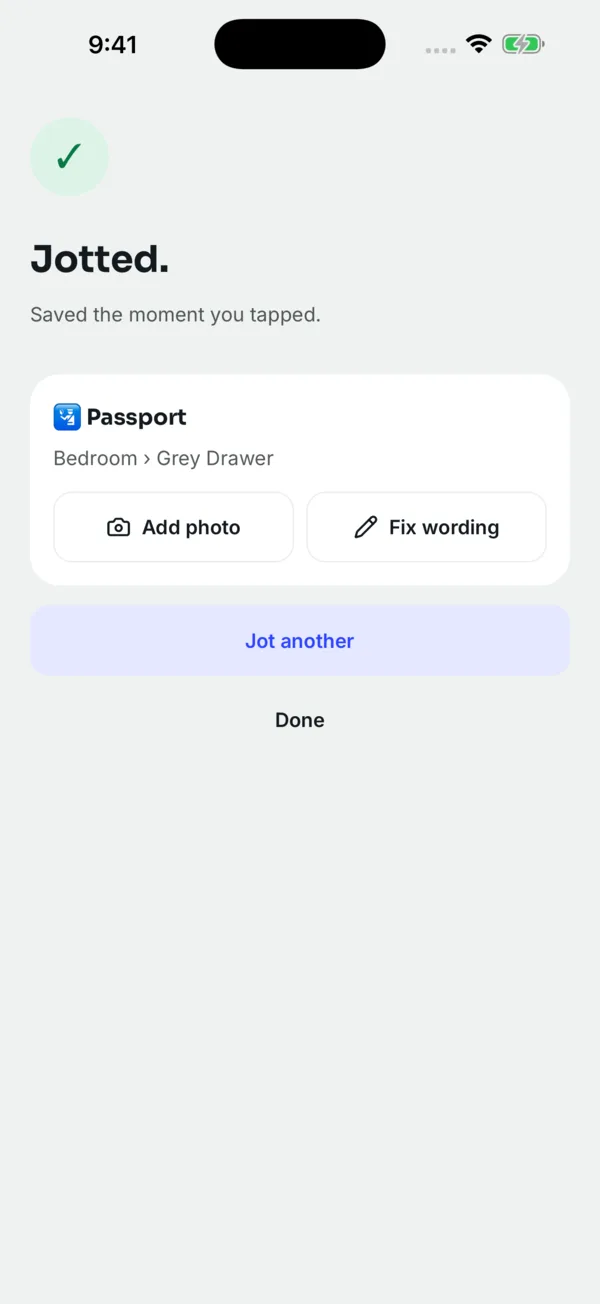
For pantry food you are storing for longer, like the emergency tins or a spare bag of flour, you can add an expiry in the same breath: "Spare flour, top pantry shelf, expires in 6 months." The app keeps the date and can remind you before it passes; see expiry reminders. Be honest with yourself about the limit, though: it does not count stock or know when you used the last tin. It only knows what you told it.
Questions people ask
Where should I store kitchen appliances I rarely use?
Heavy appliances go in a low, deep cupboard; light occasional items go high; anything used once a year or less can leave the kitchen for a labeled box in a closet or garage. Pick one tier per item and do not mix them.
What are kitchen zones?
Kitchen zones group things by task: prep, cooking, cleaning and pantry. Storing each tool where you use it means fewer steps and fewer things left out on the counter.
Is it OK to store things in the oven or on top of the fridge?
Storing pans in the oven is risky because someone will preheat it without checking. The top of the fridge is fine for light items, but heat from the back can affect food and some plastics.
Should I use a home inventory app for my kitchen?
Listing every utensil rarely lasts. It works better to record only the rare items you will forget, like the roasting tin or the pasta maker, and where they went.
 Download on the App Store