If you look after someone with asthma, a serious allergy, diabetes or any condition that needs medicine on hand, you probably don't have one inhaler or one auto-injector. You have several, spread across the places that person spends time. That is the right thing to do, and it creates its own problem: knowing where every spare inhaler and EpiPen is, and which one quietly expired in March.
This page is about that multi-location problem. If you want advice on storage conditions (heat, light, the bathroom cabinet question), read our separate guide on where to keep medication. For anything about doses, timing or which medicine to carry, your pharmacist, nurse or doctor is the right source. Nothing here is medical advice.
Start with a spares map
Before any app, write a simple table. Every medicine, every place it lives, and when it runs out. It takes ten minutes and usually turns up at least one surprise. Here is what one family's might look like:
| Medicine | Where the spare lives | Expires | Who else knows |
|---|---|---|---|
| Reliever inhaler + spacer | School office, labeled box | May | School nurse |
| Reliever inhaler | Car glovebox, zip pouch | January | Both parents |
| Auto-injector (x2) | Red pouch, school bag front pocket | August | Teacher, child |
| Auto-injector | Grandparents' kitchen, cupboard by the kettle | November | Grandma |
| Antihistamine | Sports bag side pocket | Next spring | Coach |
| Travel meds kit | Suitcase lid pocket, top of the wardrobe | Check before each trip | You |
Two things usually jump out. Spares in places you rarely visit (Grandma's, the car, the travel kit) are the ones that expire unnoticed. And "who else knows" is often blank.
Five rules that keep spares useful
- One container per location. A bright zip pouch or labeled box, the same color everywhere. "The red pouch" is easy to describe to a babysitter on the phone.
- Write the expiry where you will see it. A marker pen on the outside of the pouch, plus a reminder somewhere that will actually prompt you.
- Swap rather than restock. When a new prescription arrives, move the newest one to the place you visit least, and bring the oldest home to use first.
- Tell the people at each location. A spare that only you know about is not much use when you're not there. Schools often have their own forms and storage rules, so ask them.
- Re-check after every change. New school year, new car, a sleepover, a holiday. Things move at transitions.
Using expiry reminders for medicines
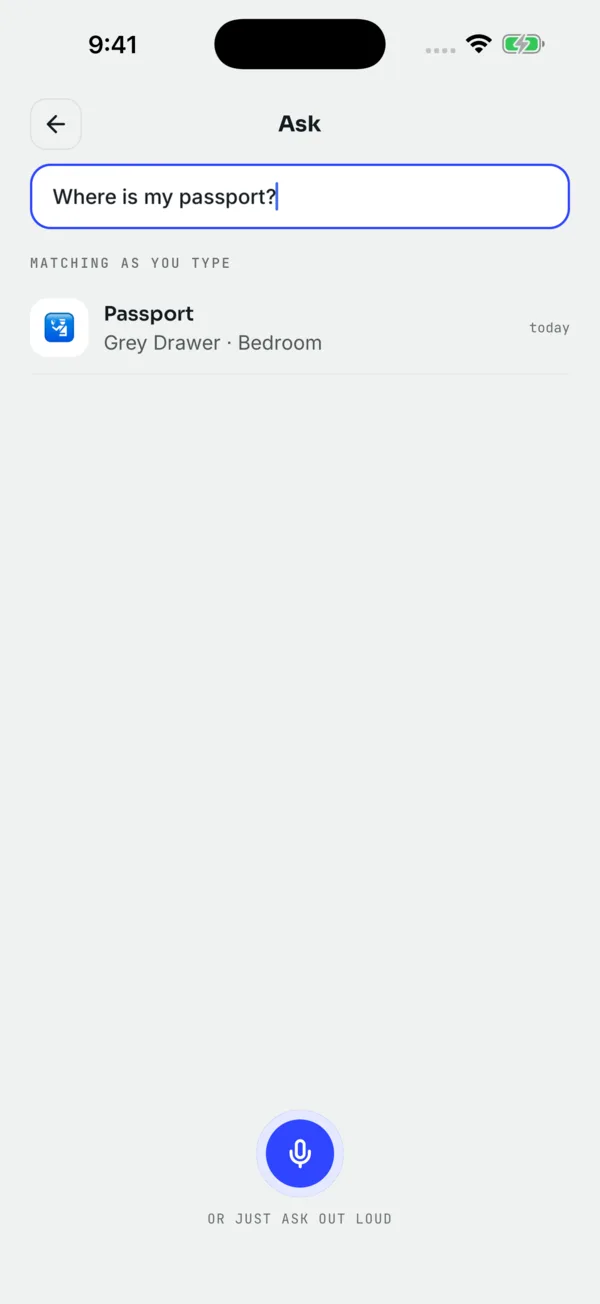
Jot the Spot is a voice memory for where things are, and it keeps expiry dates when you say them. Tap the mic and say it like you would to a partner:
"EpiPen, red pouch, school bag front pocket, expires in 8 months."
Later, ask "where are the EpiPens?" and you get every spot you've jotted for them, with a Due soon or Expired label when the date gets close. The app can send a local notification 7 days before the date (1 day for short horizons) and once after it passes. More detail on the expiry reminders page.
Some jots carers find useful:
- "Blue inhaler and spacer, school office, medicine box with Leo's name, expires in 7 months."
- "Spare inhaler, car glovebox, grey zip pouch, expires in 4 months."
- "Auto-injector, Grandma's kitchen, cupboard left of the kettle, expires in 11 months."
- "Repeat prescription letter, fridge door clip."
- "Travel meds bag, suitcase lid pocket, check before the trip in June."
If several adults share the job, household sharing (part of Unlimited) puts everyone in one memory. When your partner moves the car spare into the new car, they jot it, and you see the new spot. Shared households can also opt in to an email digest of things expiring soon.
Where this helps and where it doesn't
It helps with the "where's the other EpiPen?" moment and with spares that expire in places you never look. It does not replace the school's medicine policy, an action plan from your doctor, or your pharmacist's advice. It is not a medical device, it does not remind anyone to take a dose, and it only knows what you jot. If someone moves a spare without saying, it still shows the last spot you gave it.
Questions people ask
How many spare inhalers or EpiPens should we have?
That depends on the person and the condition, so ask your doctor, nurse or pharmacist. Many families keep spares wherever the person regularly spends time, which is why tracking them matters.
How do I keep track of medicine expiry dates in different places?
Write each spare's location and expiry date in one list, and set reminders. In Jot the Spot you can say "expires in 8 months" in the jot and it reminds you before the date.
Can a babysitter or grandparent see where the spares are?
If they are in your shared household in the app, yes. Otherwise, a printed list on the fridge does the job.
Does Jot the Spot remind people to take medicine?
No. It remembers where things are and when they expire. It is not a dose reminder or a medical device.
 Download on the App Store